
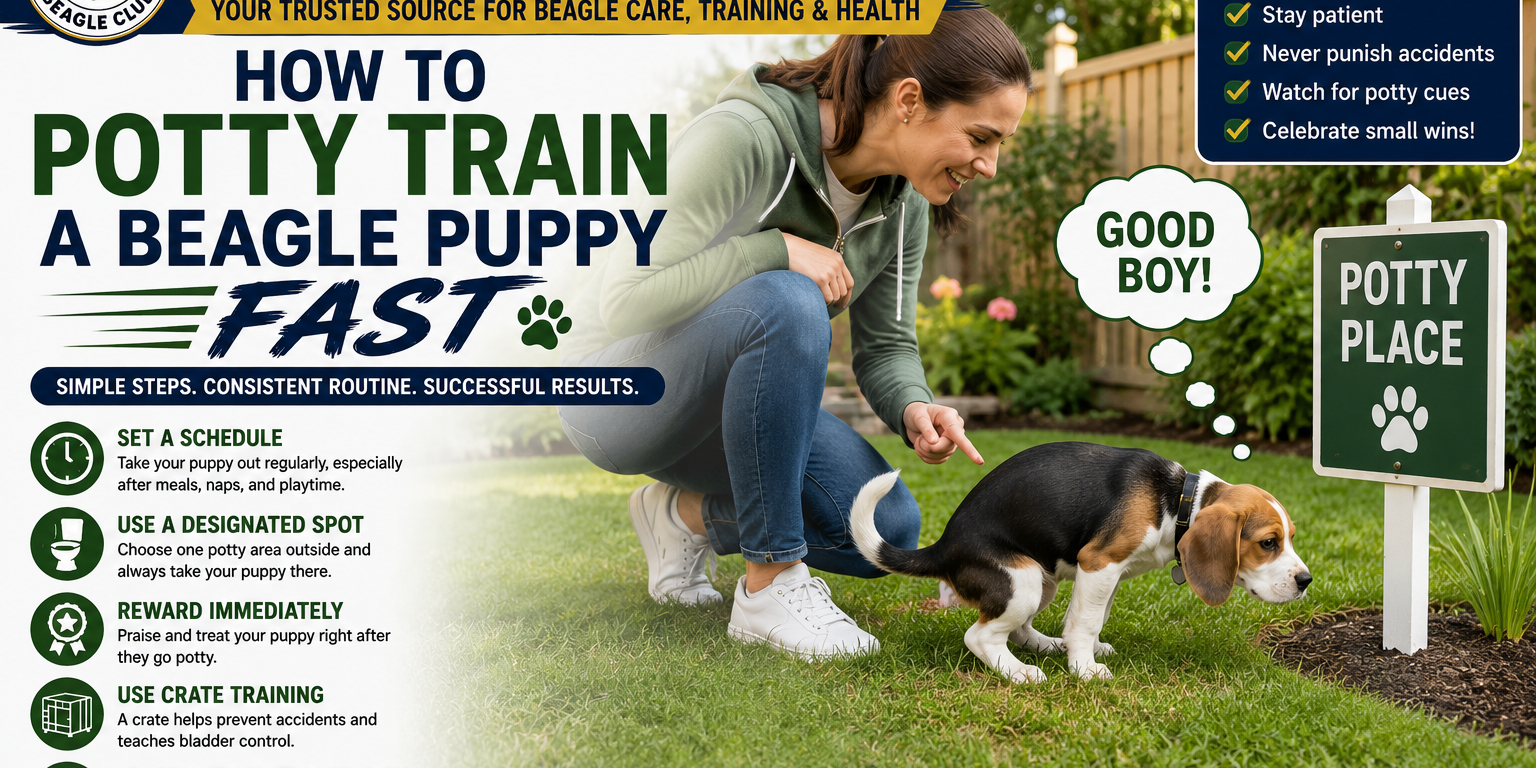
How to Potty Train a Beagle Puppy Fast
If you’re wondering how to potty train a Beagle puppy fast, you’re not alone. Potty training is one of the first and most important skills every Beagle puppy needs to learn. With a consistent routine, positive reinforcement, and patience, you can potty train your Beagle puppy to develop reliable house-training habits while reducing accidents and building confidence from the very beginning.
Bringing home a Beagle puppy is an exciting experience, but house training can feel overwhelming for first-time owners. Fortunately, Beagles are intelligent, food-motivated dogs that respond extremely well to structured routines and reward-based training. This guide explains proven methods to help you potty train your Beagle puppy as quickly and successfully as possible.
Quick Answer (Google AI Overview)
The fastest way to potty train a Beagle puppy is to:
- Follow a consistent daily potty schedule.
- Take your puppy outside immediately after waking, eating, drinking, playing, and before bedtime.
- Reward successful potty trips with praise and treats within seconds.
- Supervise your puppy indoors.
- Use crate training correctly.
- Clean accidents thoroughly with an enzymatic cleaner.
- Never punish accidents.
Most Beagle puppies show significant progress within 2–4 weeks when training is consistent.
Why Beagles Can Be Challenging to Potty Train
Beagles are scent hounds. Their incredible sense of smell often distracts them, making outdoor potty trips longer than expected. They also become excited easily, especially as puppies.
Common reasons potty training takes time include:
- Small bladder capacity
- Easily distracted outdoors
- Inconsistent owner schedules
- Too much indoor freedom
- Missing potty cues
Fortunately, Beagles love food rewards and positive attention, making them excellent learners when routines stay consistent.
Prepare Before You Begin
Before starting, gather:
- Small training treats
- Comfortable collar or harness
- Leash
- Enzymatic accident cleaner
- Crate sized appropriately
- Potty bells (optional)
Having everything ready helps prevent confusion during training.
Create a Potty Training Schedule
Routine is one of the biggest secrets to success.
Take your puppy outside:
- Immediately after waking
- After every meal
- After drinking water
- After playtime
- After naps
- Every 1–2 hours for young puppies
- Before bedtime
Young puppies cannot hold their bladder for long, so frequent trips greatly reduce accidents.
Choose One Potty Spot
Always walk your Beagle to the same outdoor location.
Using one consistent potty area helps your puppy recognize the scent and understand exactly what is expected.
Avoid allowing playtime until after your puppy has finished using the bathroom.
Reward Immediately
Timing matters.
Within one or two seconds after your puppy finishes:
- Say “Good potty!”
- Give a small treat
- Offer enthusiastic praise
Your puppy quickly learns that going outside leads to positive rewards.
Watch for Potty Signals
Many Beagle puppies give subtle warnings before they need to go.
Signs include:
- Sniffing intensely
- Walking in circles
- Suddenly stopping play
- Whining
- Heading toward a corner
- Walking toward the door
If you notice these behaviors, immediately take your puppy outside.
Why Crate Training Works
Dogs naturally avoid soiling their sleeping area.
A properly sized crate helps your Beagle:
- Develop bladder control
- Reduce accidents
- Build a predictable routine
- Feel secure
The crate should allow your puppy to stand, turn around, and lie comfortably—but not be large enough to use one corner as a toilet.
What to Do When Accidents Happen
Accidents are completely normal.
If you catch your puppy in the act:
- Calmly interrupt.
- Carry your puppy outside.
- Reward if they finish outdoors.
If you find an accident later:
- Clean thoroughly.
- Never punish your puppy.
- Review whether the potty schedule needs adjusting.
Punishment creates fear and often slows training.
Nighttime Potty Training
Young Beagle puppies usually need one or two nighttime bathroom breaks.
Tips:
- Remove water about two hours before bedtime (unless your veterinarian advises otherwise).
- Keep nighttime potty trips quiet.
- Return your puppy directly to bed.
- Avoid turning nighttime outings into play sessions.
Common Potty Training Mistakes
Avoid these common errors:
- Waiting too long between potty breaks
- Inconsistent routines
- Allowing too much unsupervised freedom
- Punishing accidents
- Skipping rewards
- Not cleaning accidents properly
Consistency is far more important than strictness.
Sample Daily Potty Schedule
7:00 AM – Wake up and potty
7:15 AM – Breakfast
7:30 AM – Potty
9:00 AM – Potty
11:00 AM – Potty
12:00 PM – Lunch (young puppies)
12:30 PM – Potty
2:00 PM – Potty
4:00 PM – Potty
6:00 PM – Dinner
6:30 PM – Potty
8:30 PM – Potty
10:00 PM – Final bedtime potty
How Long Does Potty Training Take?
Every puppy learns differently.
Typical timeline:
- Week 1: Learning routine
- Week 2–3: Fewer accidents
- Month 2: Improved bladder control
- Month 3–6: Most puppies become reliably house-trained
Consistency speeds up learning.
Frequently Asked Questions
At what age should I start potty training my Beagle puppy?
Start as soon as your puppy comes home, usually around 8 weeks of age.
How often should I take my Beagle puppy outside?
Every 1–2 hours during the day, plus after eating, drinking, sleeping, and playing.
Should I use puppy pads?
Outdoor potty training is usually faster if your goal is for your Beagle to toilet outside. Puppy pads can be helpful in some situations but may take longer to transition away from.
Is crate training necessary?
While not mandatory, crate training is one of the most effective tools for house training because it encourages bladder control and routine.
What if my Beagle keeps having accidents?
Review your schedule, supervise more closely, reward outdoor success immediately, and consult your veterinarian if accidents persist or seem unusual.
Final Thoughts
Learning how to potty train a Beagle puppy fast is all about creating predictable routines and rewarding the behavior you want to see. Be patient, celebrate small successes, and remember that every accident is an opportunity to improve your training plan rather than a setback.
With consistency, positive reinforcement, and plenty of encouragement, your Beagle puppy will develop reliable house-training habits that last a lifetime.