
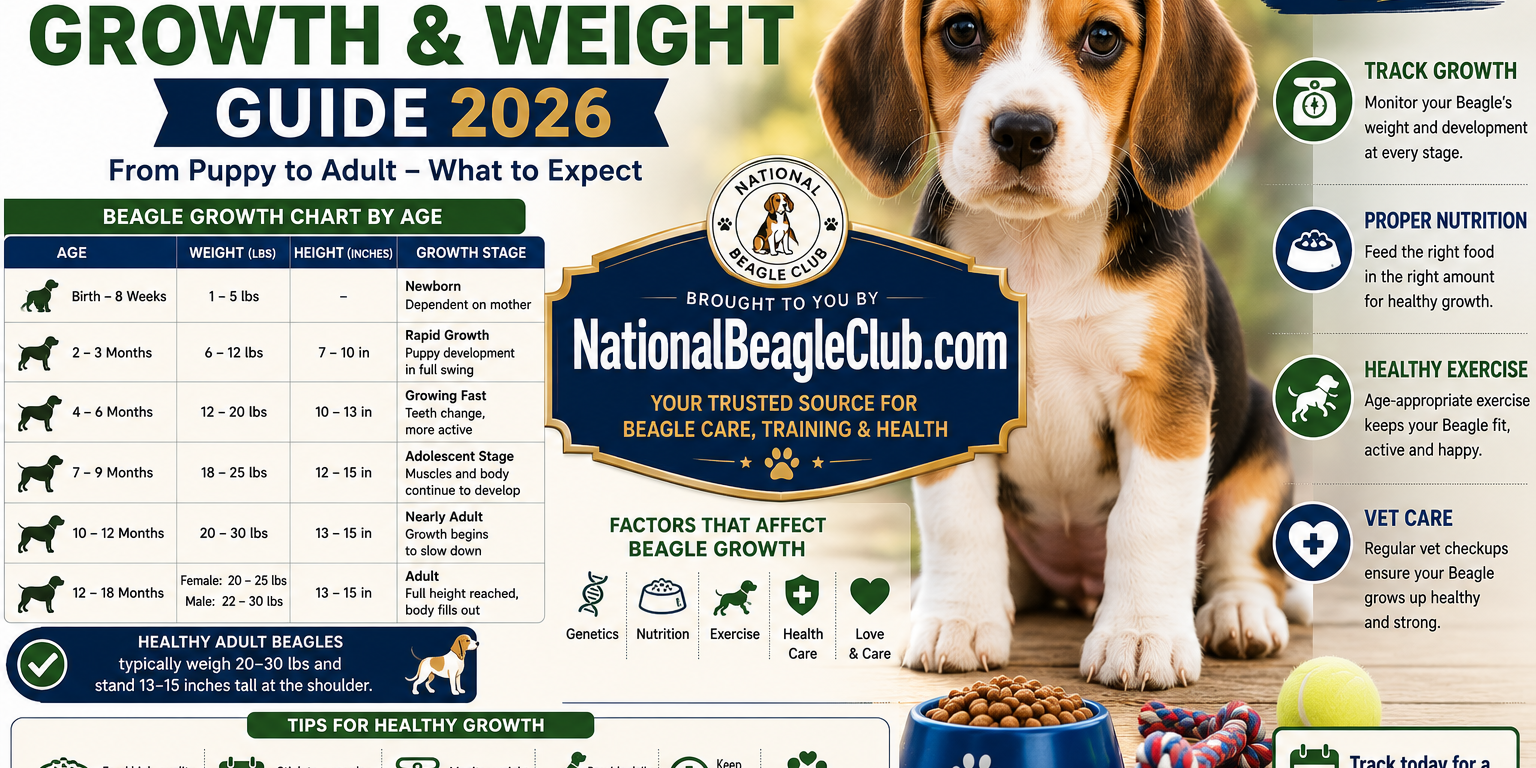
Watching your puppy grow is one of the most rewarding parts of owning a Beagle. This Beagle Growth Guide explains what to expect from puppyhood through adulthood, including average weight, height, growth milestones, feeding recommendations, and signs of healthy development. Whether you’re raising your first Beagle or simply monitoring your dog’s progress, this guide will help you understand each stage of your Beagle’s growth.
Why a Beagle Growth Guide Matters
Every Beagle grows at a slightly different pace, but understanding typical growth patterns helps you:
- Monitor healthy development
- Maintain a healthy weight
- Feed the correct amount of food
- Recognize potential health concerns
- Support long-term wellbeing
Regular growth tracking also helps your veterinarian evaluate your puppy’s overall health.
Beagle Growth Guide: Growth Chart by Age
Birth to 8 Weeks
- Weight: 1–5 pounds
- Puppies depend on their mother for nutrition.
- Eyes and ears begin to develop.
- Early socialization starts.
2–3 Months
- Weight: 6–12 pounds
- Height: 7–10 inches
- Rapid physical growth
- Begin potty training and socialization.
4–6 Months
- Weight: 12–20 pounds
- Height: 10–13 inches
- Adult teeth begin replacing puppy teeth.
- Increased activity and curiosity.
7–9 Months
- Weight: 18–25 pounds
- Height: 12–15 inches
- Muscles continue developing.
- Training becomes increasingly important.
10–12 Months
- Weight: 20–30 pounds
- Height: 13–15 inches
- Most Beagles reach nearly full height.
- Growth begins slowing.
Adult Beagle (12–18 Months)
Typical adult weight:
- Females: 20–25 pounds
- Males: 22–30 pounds
Typical adult height:
- 13–15 inches at the shoulder
Some Beagles continue filling out until approximately 18 months of age.
Factors That Affect Your Beagle Growth
Several factors influence growth, including:
- Genetics
- Nutrition
- Exercise
- Overall health
- Parasite prevention
- Veterinary care
Healthy puppies generally grow steadily rather than rapidly.
Healthy Weight for Beagles
Maintaining a healthy weight reduces the risk of:
- Joint problems
- Heart disease
- Diabetes
- Reduced mobility
A healthy Beagle should have a visible waist and easily felt ribs without excess fat.
Feeding for Healthy Growth
Feed a complete puppy food formulated for medium-sized breeds.
General feeding schedule:
- 8–12 weeks: Four meals daily
- 3–6 months: Three meals daily
- 6–12 months: Two meals daily
Avoid overfeeding, as Beagles are prone to weight gain.
Related Guide: Best Dog Food for Beagles
Exercise During Growth
Exercise supports healthy development.
Recommended activities include:
- Short walks
- Interactive play
- Puzzle toys
- Scent games
- Basic training sessions
Avoid strenuous exercise while bones and joints are still developing.
Signs Your Beagle Is Growing Well
Healthy growth includes:
- Steady weight gain
- Bright eyes
- Healthy coat
- Strong appetite
- Good energy levels
- Regular veterinary checkups
When to Contact Your Veterinarian
Seek veterinary advice if your puppy experiences:
- Poor appetite
- Sudden weight loss
- Difficulty walking
- Lethargy
- Persistent diarrhea
- Slow growth
Early intervention often prevents more serious health issues.
Common Growth Questions
When do Beagles stop growing?
Most Beagles reach their full height between 12 and 15 months and continue filling out until around 18 months.
How much should a 3-month-old Beagle weigh?
Most healthy Beagle puppies weigh approximately 6–12 pounds at three months of age.
Why is my Beagle overweight?
Overfeeding, lack of exercise, and excessive treats are common causes.
Can Beagles become overweight easily?
Yes. Beagles love food and benefit from portion control and daily exercise.
Growth Tracking Tips
Record your puppy’s:
- Monthly weight
- Height
- Veterinary visits
- Diet changes
- Exercise routine
Tracking progress makes it easier to identify changes early.
Frequently Asked Questions
What is the ideal adult weight for a Beagle?
Most adult Beagles weigh between 20 and 30 pounds depending on sex, genetics, and overall body condition.
At what age is a Beagle fully grown?
Most reach full height by 12–15 months and full maturity by about 18 months.
How often should I weigh my Beagle puppy?
Monthly weigh-ins during the first year help monitor healthy development.
Should I worry if my Beagle is smaller than average?
Not necessarily. Genetics play a significant role, but discuss concerns with your veterinarian.
What food helps healthy growth?
Choose a complete, balanced puppy food formulated for medium-sized breeds.
Final Thoughts
Monitoring your puppy’s development with a Beagle Growth Guide helps ensure healthy growth from puppyhood through adulthood. By providing proper nutrition, regular exercise, preventive veterinary care, and routine weight checks, you can support your Beagle’s lifelong health and wellbeing.
Explore more expert resources at National Beagle Club, including guides on Beagle nutrition, puppy training, health, grooming, trusted breeders, and first-time ownership.