
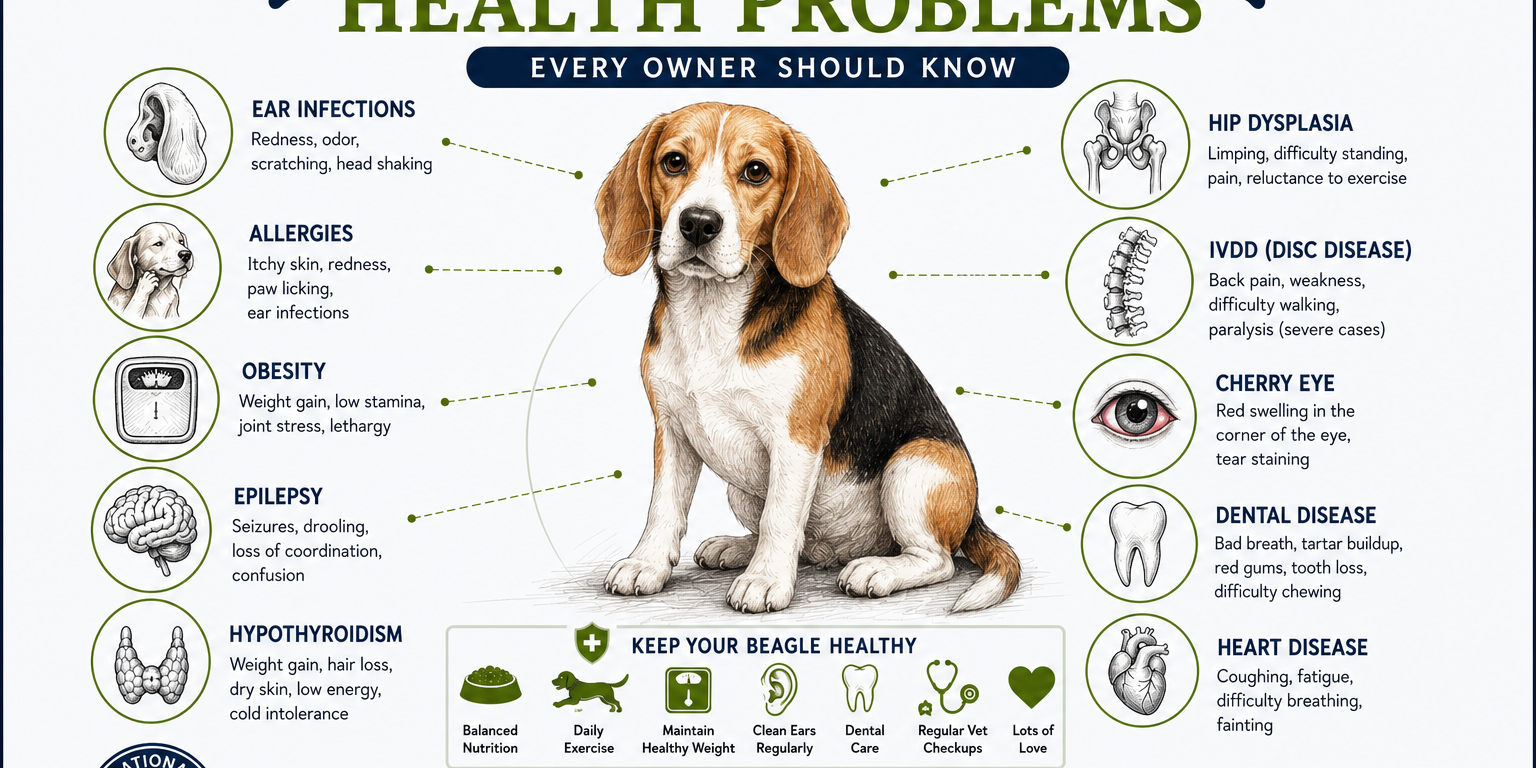
Common Beagle Health Problems Every Owner Should Know
If you’re searching for information about Beagle health problems, you’re already taking an important step toward giving your Beagle a long, healthy, and happy life. Although Beagles are one of the healthiest dog breeds, they are still prone to certain inherited and lifestyle-related conditions that every owner should recognize. Learning the early warning signs, providing proper nutrition, scheduling regular veterinary checkups, and maintaining a healthy weight can help prevent many health issues or detect them before they become serious.
Whether you’re bringing home your first Beagle puppy or caring for a senior companion, understanding the most common Beagle health problems can help you make informed decisions and provide the best possible care throughout every stage of your dog’s life.
What Are the Most Common Beagle Health Problems?
Beagles are generally healthy dogs with a life expectancy of 12–15 years, but they can be susceptible to several health conditions, including obesity, ear infections, allergies, epilepsy, hypothyroidism, hip dysplasia, intervertebral disc disease (IVDD), cherry eye, glaucoma, dental disease, and heart disease. Early diagnosis, regular veterinary care, proper nutrition, and daily exercise are the best ways to keep a Beagle healthy and reduce the risk of serious medical problems.
Why Every Beagle Owner Should Understand Beagle Health Problems
Being familiar with common Beagle health problems helps you:
- Recognize symptoms early.
- Prevent avoidable illnesses.
- Reduce expensive veterinary bills.
- Improve your Beagle’s quality of life.
- Increase life expectancy.
- Make informed healthcare decisions.
Many illnesses become much easier to manage when detected early.
Are Beagles Healthy Dogs?
Yes. Beagles are considered one of the healthiest medium-sized dog breeds thanks to their athletic build, energetic personality, and generally strong genetics.
However, no breed is immune to illness. Genetics, age, obesity, poor nutrition, allergies, parasites, and lack of preventive healthcare can all contribute to medical conditions throughout a Beagle’s life.
With proper care, many Beagles live well into their teenage years while remaining active and playful.
Beagle Health Problems: Obesity
Obesity is the most common Beagle health problem seen by veterinarians.
Because Beagles love food and have an excellent sense of smell, they often overeat if meals and treats are not carefully controlled.
Symptoms
- Rapid weight gain
- Heavy breathing
- Difficulty exercising
- Low energy
- Trouble jumping
- Excess body fat
- Sleeping more than usual
Common Causes
- Overfeeding
- Too many treats
- Lack of exercise
- Free-feeding
- Hormonal disorders
Why Obesity Is Dangerous
Excess weight increases the risk of:
- Arthritis
- Diabetes
- Heart disease
- Joint pain
- Reduced mobility
- Shortened lifespan
Prevention Tips
- Feed measured portions.
- Limit treats.
- Exercise every day.
- Avoid feeding table scraps.
- Monitor your Beagle’s weight monthly.
Beagle Health Problems: Ear Infections
Beagles have long, floppy ears that trap moisture and reduce airflow, making ear infections one of the breed’s most common health issues.
Symptoms
- Head shaking
- Constant scratching
- Redness
- Bad odor
- Swelling
- Brown discharge
- Pain when ears are touched
Common Causes
- Moisture
- Allergies
- Ear mites
- Wax buildup
- Yeast infections
- Bacterial infections
Prevention
- Check ears weekly.
- Dry ears after swimming or bathing.
- Clean ears using veterinarian-approved products.
- Treat allergies promptly.
Routine ear care greatly reduces infection risk.
Beagle Health Problems: Allergies
Allergies affect many Beagles throughout their lives and may involve the skin, digestive system, ears, or respiratory tract.
Types of Allergies
- Food allergies
- Environmental allergies
- Seasonal allergies
- Flea allergies
- Contact allergies
Symptoms
- Constant scratching
- Paw licking
- Hair loss
- Red or irritated skin
- Ear infections
- Sneezing
- Watery eyes
Treatment
Depending on the cause, your veterinarian may recommend:
- Allergy testing
- Prescription medication
- Special diets
- Flea prevention
- Medicated shampoos
- Immunotherapy
Early treatment can significantly improve your Beagle’s comfort and quality of life.
Beagle Health Problems: Epilepsy
Epilepsy is a neurological disorder that can occur in Beagles. Some cases are inherited, while others develop without a known cause.
Signs of a Seizure
- Falling over
- Muscle twitching
- Paddling legs
- Drooling
- Temporary confusion
- Loss of consciousness
What Should Owners Do?
If your Beagle has a seizure:
- Stay calm.
- Keep your dog away from furniture or stairs.
- Do not place anything inside your dog’s mouth.
- Time the seizure.
- Contact your veterinarian immediately after it ends.
Many Beagles with epilepsy live long, happy lives with proper medication and veterinary supervision.
Beagle Health Problems: Hypothyroidism
Hypothyroidism occurs when the thyroid gland does not produce enough hormones. It most commonly affects adult and senior Beagles.
Symptoms
- Weight gain
- Hair loss
- Dry skin
- Low energy
- Slow heart rate
- Skin infections
- Cold intolerance
Diagnosis
Veterinarians diagnose hypothyroidism using blood tests.
Treatment
Most Beagles respond very well to daily thyroid hormone replacement medication and routine veterinary monitoring.
Early Warning Signs You Should Never Ignore
Contact your veterinarian immediately if your Beagle develops:
- Difficulty breathing
- Persistent vomiting
- Bloody diarrhea
- Sudden collapse
- Frequent seizures
- Loss of appetite lasting more than 24 hours
- Severe limping
- Sudden blindness
- Difficulty urinating
- Extreme lethargy
Early veterinary intervention often leads to better outcomes.
How to Keep Your Beagle Healthy
Many Beagle health problems can be prevented or managed through responsible daily care.
Healthy habits include:
- Feeding a high-quality, balanced diet.
- Maintaining a healthy body weight.
- Providing daily exercise.
- Keeping fresh drinking water available.
- Scheduling annual veterinary checkups.
- Following vaccination and parasite prevention programs.
- Brushing your Beagle’s teeth regularly.
- Grooming and checking ears every week.
- Monitoring for changes in behavior or appetite.
Preventive care remains the most effective way to help your Beagle enjoy a long and healthy life.
Beagle Health Problems: Hip Dysplasia
Hip dysplasia is a condition where the hip joint does not develop properly. Although it is more common in large dog breeds, Beagles can also develop hip dysplasia due to genetics, rapid growth, obesity, or injury.
Symptoms
- Limping
- Difficulty standing
- Reluctance to run or jump
- Stiffness after resting
- Bunny-hopping while running
- Reduced activity
Diagnosis
Veterinarians diagnose hip dysplasia using:
- Physical examinations
- X-rays
- Orthopedic evaluations
Treatment
Treatment depends on severity and may include:
- Weight management
- Joint supplements
- Anti-inflammatory medication
- Physical therapy
- Hydrotherapy
- Surgery in severe cases
Prevention
- Keep your Beagle at a healthy weight.
- Avoid excessive exercise during puppy growth.
- Feed a balanced diet.
- Purchase puppies from health-tested breeders.
Beagle Health Problems: Intervertebral Disc Disease (IVDD)
Intervertebral Disc Disease (IVDD) occurs when the discs between the vertebrae become damaged or rupture, placing pressure on the spinal cord.
Although IVDD is more common in long-backed breeds, Beagles can also develop this painful spinal condition.
Symptoms
- Neck or back pain
- Crying when picked up
- Difficulty walking
- Weakness in the back legs
- Reluctance to climb stairs
- Paralysis in severe cases
Treatment
Treatment may include:
- Strict crate rest
- Pain medication
- Anti-inflammatory drugs
- Physical rehabilitation
- Surgery for severe cases
Prevention
- Prevent obesity.
- Use ramps instead of allowing repeated jumping.
- Avoid rough play that strains the spine.
- Exercise regularly without overexertion.
Beagle Health Problems: Cherry Eye
Cherry eye occurs when the gland of the third eyelid slips out of place, creating a noticeable red swelling in the corner of the eye.
Symptoms
- Red lump in the eye
- Eye irritation
- Excessive tearing
- Pawing at the eye
- Mild swelling
Treatment
Veterinarians usually recommend surgical repositioning of the gland rather than removing it, as preserving tear production is important for long-term eye health.
Early treatment often leads to excellent outcomes.
Beagle Health Problems: Glaucoma
Glaucoma is a serious eye disease caused by increased pressure inside the eye. Without prompt treatment, it can lead to permanent blindness.
Symptoms
- Red eyes
- Cloudy cornea
- Enlarged eye
- Squinting
- Excessive tearing
- Vision loss
Treatment
Treatment may involve:
- Prescription eye drops
- Pain medication
- Laser therapy
- Surgery
- Eye removal in severe, untreatable cases
Regular eye examinations help detect glaucoma before irreversible damage occurs.
Beagle Health Problems: Dental Disease
Dental disease affects the majority of adult dogs if preventive care is neglected.
Plaque and tartar buildup can lead to painful gum disease and tooth loss.
Symptoms
- Bad breath
- Yellow or brown tartar
- Bleeding gums
- Loose teeth
- Difficulty chewing
- Excessive drooling
Prevention
- Brush your Beagle’s teeth several times each week.
- Provide veterinarian-approved dental chews.
- Schedule professional dental cleanings.
- Feed a balanced diet that supports oral health.
Healthy teeth contribute to your Beagle’s overall well-being.
Beagle Health Problems: Heart Disease
Some Beagles develop heart disease as they age.
Heart conditions may include valve disease, heart murmurs, or congestive heart failure.
Symptoms
- Persistent coughing
- Fatigue
- Difficulty breathing
- Reduced exercise tolerance
- Fainting
- Swollen abdomen
Diagnosis
Your veterinarian may recommend:
- Chest X-rays
- Echocardiogram
- Electrocardiogram (ECG)
- Blood pressure testing
Treatment
Many heart conditions can be successfully managed with medication, weight management, and regular veterinary monitoring.
Beagle Health Problems: Arthritis
Arthritis becomes increasingly common as Beagles age.
Joint inflammation gradually causes pain and stiffness, reducing mobility.
Symptoms
- Difficulty standing
- Limping
- Stiffness after sleeping
- Less interest in walks
- Difficulty climbing stairs
- Reduced activity
Treatment
Veterinarians may recommend:
- Joint supplements
- Weight management
- Physical therapy
- Anti-inflammatory medication
- Low-impact exercise
Maintaining a healthy weight significantly reduces stress on the joints.
Can Beagle Health Problems Be Prevented?
While some inherited conditions cannot be completely prevented, many common Beagle health problems can be reduced through proactive care.
Owners should focus on:
- Healthy nutrition
- Regular exercise
- Weight management
- Routine veterinary examinations
- Vaccinations
- Parasite prevention
- Dental hygiene
- Ear cleaning
- Mental stimulation
- Responsible breeding practices
Prevention is often less expensive and more effective than treating advanced disease.
Frequently Asked Questions About Beagle Health Problems
What Are the Most Common Beagle Health Problems?
The most common Beagle health problems include obesity, ear infections, allergies, epilepsy, hypothyroidism, hip dysplasia, intervertebral disc disease (IVDD), cherry eye, glaucoma, dental disease, arthritis, and heart disease. Routine veterinary checkups and preventive care can help detect many of these conditions early.
Are Beagles Generally Healthy Dogs?
Yes. Beagles are considered one of the healthiest medium-sized dog breeds and typically live between 12 and 15 years. With proper nutrition, regular exercise, routine veterinary care, and a healthy lifestyle, many Beagles enjoy long, active lives.
How Can I Prevent Common Beagle Health Problems?
While some inherited conditions cannot be prevented, many Beagle health problems can be reduced by:
- Feeding a balanced, high-quality diet.
- Keeping your Beagle at a healthy weight.
- Providing daily physical exercise.
- Scheduling annual veterinary examinations.
- Brushing your dog’s teeth regularly.
- Cleaning the ears weekly.
- Keeping vaccinations current.
- Using year-round parasite prevention.
Why Are Ear Infections So Common in Beagles?
A Beagle’s long, floppy ears limit airflow and trap moisture, creating an ideal environment for bacteria and yeast to grow. Weekly ear inspections and routine cleaning can significantly reduce the risk of infection.
Can Obesity Shorten a Beagle’s Lifespan?
Yes. Obesity is one of the leading Beagle health problems and increases the risk of arthritis, diabetes, heart disease, joint pain, breathing difficulties, and reduced mobility. Maintaining a healthy body weight is one of the best ways to help your Beagle live a longer, healthier life.
How Often Should My Beagle Visit the Veterinarian?
Healthy adult Beagles should have a wellness examination at least once a year, while puppies, senior Beagles, or dogs with ongoing medical conditions may require more frequent visits as recommended by their veterinarian.
What Are the Early Warning Signs of Beagle Health Problems?
Seek veterinary advice if your Beagle develops:
- Loss of appetite
- Persistent vomiting or diarrhea
- Difficulty breathing
- Limping
- Sudden weight loss or gain
- Seizures
- Eye redness or cloudiness
- Excessive scratching
- Unusual tiredness
- Changes in drinking or urination
Early diagnosis often leads to better treatment outcomes.
Long-Term Wellness Tips for Every Beagle Owner
Helping your Beagle stay healthy is about building good habits every day.
Follow these simple wellness tips:
- Feed a nutritious, portion-controlled diet.
- Keep fresh water available at all times.
- Exercise your Beagle for 30–60 minutes daily.
- Brush your dog’s teeth several times each week.
- Clean the ears weekly.
- Maintain flea, tick, and worm prevention.
- Keep vaccinations up to date.
- Schedule routine veterinary health checks.
- Monitor your Beagle’s weight every month.
- Provide mental stimulation with toys, puzzles, and scent games.
Small daily habits can have a significant impact on your Beagle’s overall health and longevity.
Final Thoughts
Understanding Beagle health problems is one of the most important responsibilities of every Beagle owner. While the breed is generally healthy and known for its friendly personality and energetic nature, being aware of common conditions such as obesity, ear infections, allergies, epilepsy, hypothyroidism, hip dysplasia, IVDD, dental disease, glaucoma, arthritis, and heart disease allows you to recognize symptoms early and seek prompt veterinary care.
The best way to protect your Beagle is through preventive healthcare, proper nutrition, regular exercise, routine grooming, dental hygiene, and annual veterinary examinations. By staying informed and proactive, you can help your Beagle enjoy a long, active, and happy life with your family.
Whether you’re raising a playful puppy or caring for a senior companion, making your dog’s health a priority today will provide years of companionship tomorrow.