How to Choose a Healthy Beagle Puppy
Bringing home a healthy Beagle puppy is an exciting decision, but choosing the right puppy requires more than picking the cutest one in the litter. You should look at the puppy’s physical condition, behavior, environment, parents, health records, breeder practices, and veterinary care before making your decision.
A healthy puppy should appear bright, alert, clean, active, and comfortable. However, appearance alone cannot guarantee that a puppy has no underlying health condition. A responsible breeder, appropriate health screening, complete records, and a veterinary examination are all important parts of making an informed choice.
This guide explains how to choose a healthy Beagle puppy, what to look for when visiting a litter, which questions to ask the breeder, what health documents to request, and what to do after bringing your new Beagle home.
Healthy Beagle Puppy
Quick Answer
To choose a healthy Beagle puppy, look for a puppy that is alert, active, clean, well-socialized, and in good overall body condition. Check the puppy’s eyes, ears, coat, nose, movement, appetite, and behavior, and ask the breeder for veterinary records and health-screening information for the parents. A veterinary examination after bringing the puppy home is also important.
Do not choose a puppy based on appearance alone. Responsible breeding practices, appropriate health testing, early socialization, transparent records, and ongoing veterinary care are important parts of responsible puppy ownership.
What Does a Healthy Beagle Puppy Look Like?
A healthy Beagle puppy should generally look comfortable, active, and well cared for.
When you visit a litter, observe the puppies before immediately picking one up. This gives you an opportunity to see how they naturally behave.
Look for a puppy that:
- Is alert and interested in its surroundings
- Moves comfortably
- Has a clean, healthy-looking coat
- Has clear-looking eyes
- Has clean ears without obvious discharge
- Has a clean nose
- Has a healthy body condition
- Shows normal curiosity
- Interacts appropriately with littermates
- Recovers reasonably well from normal environmental sounds
A puppy does not have to be the most energetic puppy in the litter. Look for a balanced puppy that appears comfortable, responsive, and appropriately active.
Healthy Beagle Puppy Body Condition
Body condition is an important part of evaluating a puppy.
Avoid choosing a puppy simply because it appears especially round or heavy. Puppies should be growing appropriately for their age, breed, and individual development.
A puppy that appears unusually thin, weak, bloated, or significantly different from its littermates deserves additional veterinary attention before purchase.
Ask the breeder about:
- The puppy’s current weight
- Feeding schedule
- Food being provided
- Growth history
- Deworming
- Veterinary examinations
- Any previous illness
The breeder should be able to explain how the puppies are being cared for and what veterinary care they have received.
Healthy Beagle Puppy Eyes
A puppy’s eyes should look bright and comfortable.
When examining a puppy, look for:
- Clear-looking eyes
- No obvious thick discharge
- No significant redness
- No persistent squinting
- Normal interaction with its surroundings
If you notice significant discharge, swelling, persistent squinting, or obvious discomfort, ask the breeder about it and consider having the puppy examined by a veterinarian before proceeding.
Healthy Beagle Puppy Ears
Beagles have floppy ears that deserve regular attention.
When choosing a puppy, check that the ears appear reasonably clean and free from obvious redness, swelling, heavy discharge, or strong odor.
Ask the breeder whether the puppy has experienced any ear problems.
Remember that a visual inspection cannot diagnose an ear infection or other medical condition. A veterinarian should evaluate anything concerning.
Healthy Beagle Puppy Coat and Skin
A healthy-looking puppy should generally have a clean coat and comfortable-looking skin.
Check for:
- Excessive scratching
- Bald areas
- Significant redness
- Sores
- Crusts
- Heavy flakes
- Parasites
- Persistent irritation
A puppy that scratches occasionally may simply be responding to normal sensations, but persistent scratching or visible skin problems should be investigated.
Ask whether the puppies have received appropriate parasite prevention and whether they have had any recent skin problems.
Healthy Beagle Puppy Movement
Watch the puppy walk and play on a safe surface.
Look for comfortable, coordinated movement.
Be cautious if you notice:
- Persistent limping
- Difficulty standing
- Severe weakness
- Reluctance to move
- Repeated falling
- Obvious pain
A young puppy can occasionally stumble during play, so one brief awkward movement does not automatically indicate a problem. Persistent or obvious movement abnormalities should be evaluated by a veterinarian.
Healthy Beagle Puppy Behavior
Health isn’t only about physical appearance.
Temperament and behavior also matter when choosing a puppy.
A well-socialized puppy may show:
- Curiosity
- Interest in people
- Playfulness
- Appropriate interaction with littermates
- Interest in its surroundings
- A reasonable ability to settle after excitement
You should not expect every puppy to behave exactly the same way.
Some puppies are naturally more confident while others are quieter. The goal is to find a puppy whose temperament fits your household and lifestyle.
How the Breeder Raises the Puppies Matters
One of the most important parts of choosing a healthy Beagle puppy is evaluating the environment where the litter is raised.
A responsible breeder should be willing to discuss:
- The puppy’s parents
- The breeding program
- Health screening
- Veterinary care
- Nutrition
- Socialization
- Vaccinations
- Parasite prevention
- Contracts
- Health guarantees
- What happens if the owner can no longer keep the dog
The environment should appear clean and appropriately maintained, and the adult dogs should receive proper care.
A breeder should also be willing to answer reasonable questions rather than pressuring you to make a rushed decision.
Meet the Beagle Puppy’s Parents
Whenever possible, ask to meet the puppy’s mother and learn about the father.
Seeing the parents can provide useful information about:
- Adult size
- Temperament
- Physical characteristics
- General condition
- Behavior around people
Meeting the parents does not guarantee a puppy’s future health or temperament, but it can give you valuable information about the breeding program.
Ask whether the parents have undergone recommended health screening.
Beagle Health Testing to Ask About
Health testing is different from simply taking a dog to the veterinarian for routine care.
For Beagles, breed-health recommendations include screening related to hips, eyes, Musladin-Lueke Syndrome (MLS), and an additional screening option involving thyroid or cardiac health. These recommendations are published through the American Kennel Club’s breed-health resources and the National Beagle Club of America’s health statement.
Ask the breeder:
- Which health tests were performed?
- Which parent was tested?
- When were the tests completed?
- Can I see the actual results?
- Can the results be independently verified?
Do not rely solely on a breeder saying that the parents are “healthy.”
Ask for documentation.
Ask for the Beagle Puppy’s Health Records
Before taking your puppy home, ask for copies of relevant records.
These may include:
- Veterinary examination records
- Vaccination records
- Deworming records
- Microchip information, if applicable
- Health-screening documentation
- Registration information, if applicable
- Written health guarantee
- Sales contract
- Feeding instructions
Keep these records in a safe place because your veterinarian will need important information about the puppy’s previous care.
Healthy Beagle Puppy Vaccination Records
Ask the breeder which vaccinations the puppy has already received.
The exact vaccination schedule should be determined with a veterinarian based on the puppy’s age, previous vaccinations, location, lifestyle, and health status.
Do not assume that receiving one vaccination means a puppy has completed its entire vaccination series.
Take the puppy’s vaccination records to your veterinarian so the clinic can determine what additional care is appropriate.
Healthy Beagle Puppy Parasite Prevention
Puppies commonly require veterinary guidance regarding intestinal parasites and other parasites.
Ask the breeder:
- Has the puppy been dewormed?
- When was the last treatment?
- What product was used?
- Has a fecal examination been performed?
- What parasite prevention is currently being used?
Never give a puppy medication simply because someone recommends it online. Your veterinarian should determine what products and schedules are appropriate for your puppy.
Questions to Ask a Beagle Breeder
Before choosing your puppy, prepare a list of questions.
Questions About the Parents
Ask:
- How old are the parents?
- Can I meet the mother?
- Can I learn about the father?
- What health testing has been completed?
- Can I see the test results?
- What is the temperament of the parents?
- Have the parents experienced any significant health problems?
Questions About the Puppies
Ask:
- Has each puppy received a veterinary examination?
- What vaccinations have been given?
- When were the puppies dewormed?
- What food are they eating?
- How are they being socialized?
- Have any puppies been ill?
- What records will accompany the puppy?
Questions About the Breeder
Ask:
- How long have you bred Beagles?
- Why did you produce this litter?
- Can I visit the puppies?
- Can I contact you after taking the puppy home?
- Do you provide a written contract?
- What happens if I can no longer keep the puppy?
Responsible breeders should be comfortable discussing these subjects.
Red Flags When Choosing a Beagle Puppy
Not every puppy seller follows responsible breeding practices.
Be cautious when a seller:
- Refuses to let you see where puppies are raised
- Cannot provide basic health records
- Refuses to discuss the parents
- Cannot explain health testing
- Makes unrealistic health guarantees
- Pressures you to pay immediately
- Has many different breeds constantly available
- Will not answer basic questions
- Offers to send the puppy without appropriate documentation
- Avoids veterinary information
One warning sign does not automatically prove that a seller is irresponsible, but multiple concerns should make you stop and investigate further.
Don’t Choose a Beagle Puppy in a Hurry
Choosing a puppy is a major commitment.
Do not let excitement pressure you into making a decision before you have reviewed the puppy’s records and evaluated the breeder.
Take time to:
- Research the breed
- Compare breeders
- Ask questions
- Review health information
- Visit the puppies
- Meet the parents when possible
- Discuss the puppy with your household
- Plan for veterinary care
A responsible breeder should care about where their puppies are going and should be interested in whether your home is a good fit.
Healthy Beagle Puppy Socialization
Early socialization is an important part of raising a well-adjusted Beagle.
Ask the breeder how the puppies are exposed to:
- Different people
- Normal household sounds
- Gentle handling
- Appropriate surfaces
- Safe environments
- Age-appropriate experiences
Once your puppy comes home, continue socialization gradually and safely with guidance from your veterinarian.
Socialization should be positive rather than overwhelming.
When Should a Beagle Puppy Go to the Veterinarian?
Arrange a veterinary appointment soon after bringing your puppy home.
Your veterinarian can evaluate:
- General health
- Body condition
- Heart and lungs
- Eyes and ears
- Teeth and mouth
- Skin and coat
- Movement
- Parasites
- Vaccination needs
- Preventive care
Bring all records provided by the breeder.
Early veterinary care also gives you an opportunity to establish a long-term healthcare plan for your Beagle.
What to Do After Bringing Your Beagle Puppy Home
The first few days should focus on helping your puppy settle into a safe routine.
Prepare:
- A comfortable sleeping area
- Appropriate puppy food
- Clean water
- Safe toys
- A collar or harness
- Identification
- Puppy-proofed areas
- Cleaning supplies
- A veterinary appointment
Keep the environment calm and introduce new experiences gradually.
Your puppy is adjusting to a completely new home, so patience is important.
Healthy Beagle Puppy Nutrition
Ask the breeder what food the puppy has been eating before changing its diet.
Sudden food changes can cause digestive upset.
Discuss nutrition with your veterinarian and choose a complete diet appropriate for your puppy’s age and growth needs.
Avoid giving puppies random supplements unless your veterinarian recommends them.
How to Know Your Beagle Puppy Is Thriving
Over time, your puppy should continue developing and becoming more comfortable in your home.
Positive signs include:
- Good appetite
- Normal energy
- Regular bathroom habits
- Healthy-looking coat
- Normal growth
- Interest in play
- Appropriate sleep
- Increasing confidence
- Positive response to training
If your puppy’s behavior, appetite, energy, or physical condition changes significantly, contact your veterinarian.
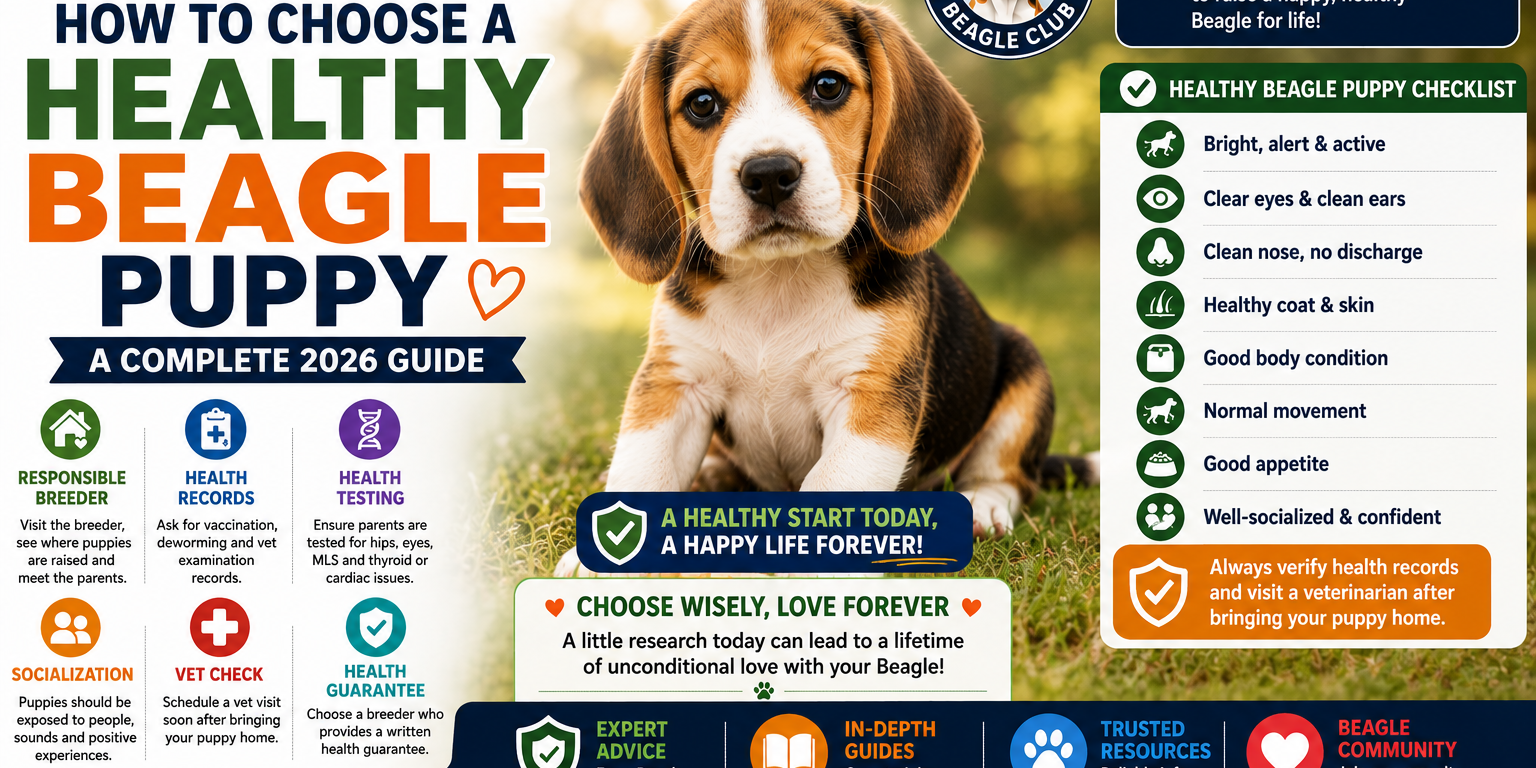
Healthy Beagle Puppy Checklist
Before bringing your puppy home, review the following:
- Puppy appears alert and comfortable
- Puppy moves normally
- Eyes appear clear and comfortable
- Ears appear clean
- Coat and skin appear healthy
- Puppy has appropriate body condition
- Puppy interacts normally with littermates
- Parent information is available
- Recommended health testing has been discussed
- Health records are available
- Vaccination information is provided
- Deworming information is provided
- Written contract is available
- Feeding instructions are provided
- Veterinary appointment is planned
- Puppy supplies are ready at home
Frequently Asked Questions About Choosing a Healthy Beagle Puppy
How Can I Tell if a Beagle Puppy Is Healthy?
Look for an alert, active, clean, comfortable puppy with clear-looking eyes, clean ears, a healthy-looking coat, normal movement, and appropriate interaction with people and littermates. A veterinarian should make the final assessment of the puppy’s health.
What Health Tests Should Beagle Breeders Perform?
Beagle breed-health recommendations include hip evaluation, an eye examination, an MLS DNA test, and an additional thyroid or cardiac screening option. Ask the breeder for documentation of the parents’ results rather than relying only on verbal claims.
Should I Take My New Beagle Puppy to a Veterinarian?
Yes. Schedule a veterinary examination after bringing your puppy home. Your veterinarian can review the puppy’s records, assess overall health, and establish an appropriate vaccination and preventive-care plan.
What Age Should a Beagle Puppy Go Home?
Puppies should remain with their mother and littermates for an appropriate early developmental period. Responsible breeders generally do not send puppies home too early and should discuss the timing with prospective owners.
Should I Meet the Beagle Puppy’s Parents?
Yes, when possible. Meeting the parents can help you learn more about adult temperament, appearance, and the breeder’s overall program. It does not guarantee the puppy’s future health.
What Should a Beagle Puppy Health Guarantee Include?
A health guarantee should be written clearly in the sales contract and explain the breeder’s responsibilities, the buyer’s responsibilities, applicable veterinary requirements, and what happens if a significant health problem is identified.
Have the contract reviewed carefully before agreeing to purchase.
What Are Warning Signs When Buying a Beagle Puppy?
Be cautious when a seller refuses to provide health records, avoids questions about the parents, refuses reasonable visits, cannot explain veterinary care, or pressures you into making an immediate purchase.
Can a Puppy Look Healthy but Still Have a Health Problem?
Yes. A visual inspection cannot identify every medical or inherited condition. That is why breeder health screening, documentation, and veterinary examinations are important.
Final Thoughts: Choosing a Healthy Beagle Puppy
Choosing a healthy Beagle puppy is about much more than appearance. The best decision combines careful observation, responsible breeding practices, health documentation, appropriate socialization, and professional veterinary care.
Take your time when evaluating breeders and puppies. Ask questions, request documentation, meet the parents when possible, and make sure you understand the puppy’s previous care before bringing them home.
Once your Beagle arrives, continue that foundation with proper nutrition, preventive veterinary care, training, exercise, socialization, and plenty of positive attention.
A careful start can help you and your Beagle build a strong relationship that lasts for many years.