Beagle Vaccination Schedule 2026
If you’re looking for the complete Beagle Vaccination Schedule, you’ve come to the right place. Vaccinations are one of the most important ways to protect your Beagle from serious and potentially life-threatening diseases. Whether you’ve just welcomed a Beagle puppy into your family or you’re caring for an adult Beagle, following the correct vaccination schedule helps build strong immunity and supports a long, healthy life.
This comprehensive guide explains when your Beagle should receive each vaccine, which vaccines are considered core and non-core, what to expect after vaccination, and how to keep your Beagle protected throughout every stage of life.
Why Following a Beagle Vaccination Schedule Is Important
Vaccinations protect your Beagle from dangerous diseases that can spread quickly among dogs.
Benefits include:
- Preventing life-threatening illnesses.
- Building a strong immune system.
- Protecting other dogs.
- Reducing expensive veterinary treatments.
- Meeting boarding and travel requirements.
- Supporting long-term health.
Vaccinating your Beagle on time gives them the best possible protection during their most vulnerable months.
How Vaccines Protect Your Beagle
Vaccines work by safely exposing your Beagle’s immune system to weakened or inactive forms of viruses or bacteria. This allows the immune system to develop protection without causing the disease itself.
If your Beagle is later exposed to the real disease, their immune system can respond much faster, reducing the risk of severe illness.
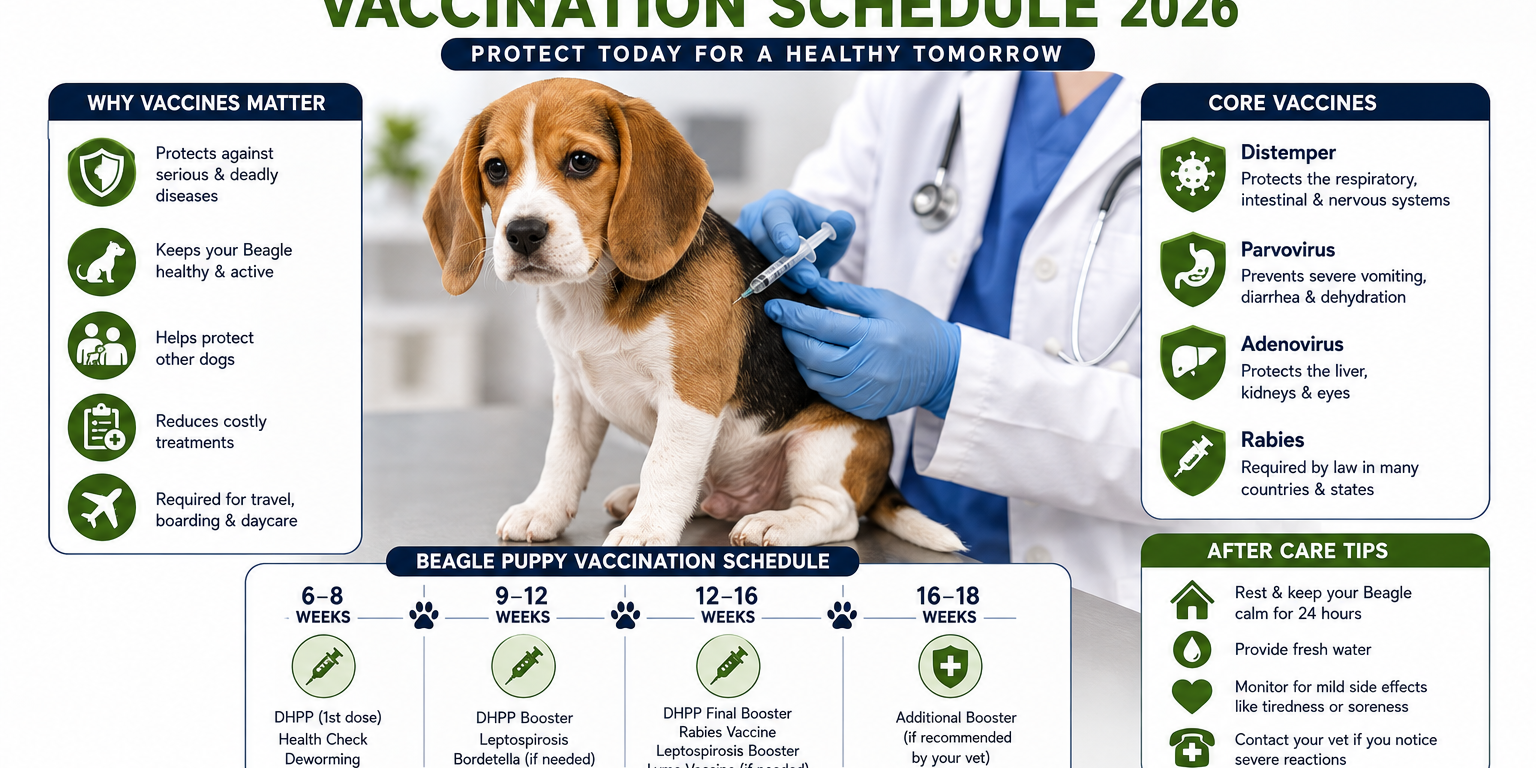
Core Vaccines Every Beagle Should Receive
Core vaccines are recommended for nearly every Beagle regardless of where they live.
These include protection against:
- Canine Distemper Virus (CDV)
- Canine Parvovirus (CPV)
- Canine Adenovirus (CAV-2/Hepatitis)
- Rabies (required by law in many countries)
These diseases are highly contagious and, in many cases, potentially fatal without vaccination.
Beagle Vaccination Schedule for Puppies
6–8 Weeks
Your Beagle puppy’s first veterinary visit usually includes:
- Distemper
- Parvovirus
- Adenovirus
- General health examination
- Fecal parasite screening
- Deworming if necessary
At this age, maternal antibodies begin decreasing, allowing vaccines to start providing protection.
9–12 Weeks
During this visit your veterinarian will typically administer:
- DHPP booster
- Leptospirosis (depending on risk)
- Bordetella (if needed)
- Continued parasite prevention
Your veterinarian will discuss your puppy’s lifestyle and recommend additional vaccines if appropriate.
12–16 Weeks
Most puppies receive:
- Final DHPP booster
- Rabies vaccine
- Leptospirosis booster (if started earlier)
- Lyme vaccine (where recommended)
After completing this stage, most puppies have developed significantly stronger immunity.
16–18 Weeks
Some veterinarians recommend an additional booster for puppies at higher risk or when maternal antibodies may have interfered with earlier vaccinations.
Always follow your veterinarian’s advice regarding booster timing.
Puppy Vaccination Timeline
| Puppy Age | Recommended Vaccines |
|---|---|
| 6–8 Weeks | DHPP (First Dose) |
| 9–12 Weeks | DHPP Booster, Optional Vaccines |
| 12–16 Weeks | DHPP Final Booster, Rabies |
| 16–18 Weeks | Additional Booster (If Recommended) |
Diseases Prevented by Vaccination
Canine Distemper
Distemper affects:
- Brain
- Lungs
- Digestive system
- Nervous system
Symptoms include:
- Fever
- Coughing
- Nasal discharge
- Vomiting
- Seizures
Distemper is often fatal without vaccination.
Canine Parvovirus
Parvovirus is one of the most dangerous diseases affecting puppies.
Symptoms include:
- Severe vomiting
- Bloody diarrhea
- Dehydration
- Fever
- Weakness
Prompt veterinary treatment is essential.
Canine Hepatitis (Adenovirus)
This virus primarily attacks the liver.
Signs include:
- Fever
- Loss of appetite
- Eye inflammation
- Abdominal pain
- Liver damage
Vaccination provides excellent protection.
Rabies
Rabies is almost always fatal once symptoms develop.
It affects:
- Brain
- Nervous system
- Wildlife
- Humans
Many countries legally require rabies vaccination for dogs.
What to Expect After Vaccination
Most Beagles experience only mild, short-term side effects such as:
- Sleepiness
- Mild soreness
- Reduced appetite
- Small swelling at the injection site
These symptoms usually disappear within 24–48 hours.
Contact your veterinarian immediately if your Beagle experiences:
- Facial swelling
- Difficulty breathing
- Severe vomiting
- Collapse
- Persistent lethargy
Although rare, serious vaccine reactions require immediate medical attention.
Beagle Vaccination Schedule for Adult Dogs
After your Beagle completes the puppy vaccination series, regular booster vaccinations are essential to maintain long-term immunity.
The exact schedule depends on your veterinarian’s recommendations, your location, your Beagle’s health, and the vaccines used.
A typical adult Beagle Vaccination Schedule includes:
| Age | Recommended Vaccinations |
|---|---|
| 1 Year | DHPP Booster, Rabies Booster (if required), Leptospirosis (if recommended) |
| Every 1–3 Years | DHPP Booster |
| Every 1–3 Years | Rabies Booster (according to local laws) |
| Annually | Lifestyle-based vaccines if recommended |
Never skip booster appointments, as immunity decreases over time.
Why Booster Vaccinations Matter
Booster vaccinations “remind” your Beagle’s immune system how to fight dangerous diseases.
Without boosters, protection against viruses such as distemper and parvovirus can gradually weaken.
Booster vaccinations help:
- Maintain immunity.
- Reduce disease outbreaks.
- Protect older Beagles.
- Protect puppies and other dogs.
- Support herd immunity within the dog population.
Non-Core Vaccines
Not every Beagle requires every vaccine.
Veterinarians recommend non-core vaccines based on:
- Lifestyle
- Geographic location
- Travel
- Exposure risk
- Boarding facilities
- Dog parks
- Hunting activities
Common non-core vaccines include:
- Bordetella (Kennel Cough)
- Leptospirosis
- Lyme Disease
- Canine Influenza
Your veterinarian can determine whether these vaccines are appropriate.
Bordetella (Kennel Cough)
Recommended for Beagles that:
- Visit boarding kennels
- Attend dog daycare
- Visit dog parks
- Participate in dog shows
- Attend obedience classes
Symptoms include:
- Dry coughing
- Sneezing
- Nasal discharge
- Mild fever
Many boarding facilities require proof of Bordetella vaccination.
Leptospirosis
Leptospirosis is caused by bacteria spread through contaminated water and wildlife urine.
Beagles that hike, hunt, or spend time outdoors may have an increased risk.
Symptoms include:
- Fever
- Vomiting
- Kidney disease
- Liver damage
- Muscle pain
Vaccination provides valuable protection in high-risk areas.
Lyme Disease
Ticks can transmit Lyme disease to dogs.
Vaccination may be recommended if you live in or travel to areas where Lyme disease is common.
Symptoms include:
- Limping
- Fever
- Joint pain
- Swollen lymph nodes
- Loss of appetite
Tick prevention remains important even after vaccination.
Canine Influenza
Canine influenza spreads rapidly where dogs gather.
Vaccination is commonly recommended for Beagles that:
- Attend daycare
- Stay at boarding facilities
- Participate in competitions
- Frequently interact with other dogs
What If My Beagle Misses a Vaccination?
Missing one appointment does not necessarily mean your Beagle must restart the entire vaccination series.
Your veterinarian will determine:
- Whether immunity is still adequate.
- If a booster is sufficient.
- Whether additional doses are necessary.
Contact your veterinarian as soon as possible if your Beagle misses a scheduled vaccination.
Can Beagle Puppies Go Outside Before Completing Vaccinations?
Beagle puppies should avoid high-risk public areas until they have completed their vaccination series.
Avoid:
- Dog parks
- Pet store floors
- Unknown dogs
- Shared water bowls
- Areas heavily used by unvaccinated dogs
Safe activities include:
- Your private garden or fenced yard
- Carrying your puppy during walks
- Controlled socialization with fully vaccinated dogs
Early socialization remains important but should be done safely.
Vaccine Side Effects
Most vaccines cause only mild side effects.
Common reactions include:
- Mild tiredness
- Sleeping more
- Tender injection site
- Temporary loss of appetite
- Mild fever
These usually disappear within 24–48 hours.
Serious Vaccine Reactions
Although uncommon, seek immediate veterinary care if your Beagle develops:
- Facial swelling
- Difficulty breathing
- Persistent vomiting
- Severe diarrhea
- Collapse
- Pale gums
- Seizures
Serious allergic reactions are rare but require emergency treatment.
Vaccination Records
Keep a copy of your Beagle’s vaccination record.
You’ll often need it for:
- Boarding kennels
- Grooming appointments
- Dog daycare
- Travel
- Competitions
- Breeding records
- Emergency veterinary care
Many owners also keep digital copies for convenience.
Traveling With Your Beagle
If you plan to travel, check vaccination requirements well in advance.
Some countries or airlines may require:
- Rabies vaccination
- Rabies antibody testing
- Health certificates
- Microchipping
- Parasite treatments
Planning ahead helps avoid delays or denied entry.
Tips for Keeping Your Beagle Healthy Between Vaccinations
Vaccines are only one part of preventive healthcare.
Help keep your Beagle healthy by:
- Feeding a balanced diet.
- Providing daily exercise.
- Maintaining a healthy weight.
- Keeping parasite prevention up to date.
- Brushing teeth regularly.
- Cleaning ears weekly.
- Scheduling annual wellness exams.
- Monitoring for changes in appetite or behavior.
Combining vaccinations with good daily care gives your Beagle the best chance of a long, healthy life.
Common Vaccination Mistakes
Avoid these common errors:
- Skipping booster appointments.
- Losing vaccination records.
- Assuming indoor dogs don’t need vaccines.
- Missing annual wellness exams.
- Ignoring mild illness before vaccination.
- Waiting too long between puppy vaccinations.
Consistency is the key to long-term protection.
Frequently Asked Questions About the Beagle Vaccination Schedule
At What Age Should a Beagle Puppy Receive Its First Vaccination?
Most veterinarians recommend starting the Beagle Vaccination Schedule when puppies are 6–8 weeks old. Early vaccinations help protect against dangerous diseases while your puppy’s immune system is still developing.
How Many Vaccinations Does a Beagle Puppy Need?
Most Beagle puppies receive a series of vaccinations every 3–4 weeks until they are approximately 16 weeks old. The exact schedule depends on your veterinarian and your puppy’s health.
Does My Adult Beagle Still Need Booster Vaccinations?
Yes.
Following the Beagle Vaccination Schedule throughout adulthood is essential. Booster vaccinations help maintain immunity against diseases such as distemper, parvovirus, adenovirus, and rabies.
Can My Beagle Go for Walks Before Completing the Vaccination Schedule?
Your Beagle puppy should avoid high-risk public areas until the initial Beagle Vaccination Schedule has been completed.
Safe options include:
- Your own fenced garden
- Carrying your puppy outdoors
- Controlled socialization with fully vaccinated dogs
Are Vaccines Safe for Beagles?
Yes.
Vaccines undergo extensive testing and are considered very safe. Most Beagles experience only mild side effects such as tiredness or slight soreness that usually disappear within 24–48 hours.
What Happens If I Miss My Beagle’s Vaccination Appointment?
Contact your veterinarian as soon as possible.
Missing one appointment does not always mean your Beagle must restart the entire vaccination series. Your veterinarian will determine the best way to continue the schedule.
Do Indoor Beagles Need Vaccinations?
Yes.
Even indoor Beagles can be exposed to viruses through people, other animals, veterinary visits, grooming salons, or boarding facilities.
Is Rabies Vaccination Required?
Many countries, states, and local authorities legally require rabies vaccination for dogs.
Check your local regulations and always keep proof of vaccination available.
Tips for Keeping Your Beagle Healthy After Vaccination
Vaccinations work best when combined with excellent daily care.
Continue to:
- Feed a premium-quality diet.
- Exercise daily.
- Maintain a healthy body weight.
- Brush teeth regularly.
- Clean ears weekly.
- Keep flea, tick, and worm prevention current.
- Schedule annual veterinary health checks.
- Monitor appetite and behavior.
Healthy habits strengthen your Beagle’s immune system and overall well-being.
Final Thoughts
Following the Beagle Vaccination Schedule is one of the most important responsibilities of every Beagle owner. Vaccinations provide protection against serious diseases that can affect puppies and adult dogs alike. By working closely with your veterinarian, keeping accurate vaccination records, and ensuring booster shots are given on time, you can give your Beagle the strongest possible defense against preventable illnesses.
Remember that vaccines are only one part of a complete healthcare plan. Proper nutrition, regular exercise, parasite prevention, routine dental care, and annual wellness examinations all contribute to helping your Beagle live a longer, healthier, and happier life.
Whether you’re raising a new puppy or caring for a senior Beagle, staying committed to a proper Beagle Vaccination Schedule is an investment in your dog’s future health and quality of life.